Which chip stock gives you the better shot at growth in 2026? In the AMD vs Intel stock debate, AMD looks like the cleaner growth story today, while Intel looks like a riskier turnaround with more ways to disappoint, or surprise.
That gap matters because AI demand is lifting the whole sector, but not at the same pace for every company. If you want the short answer, AMD looks stronger on current momentum, while Intel looks more interesting for investors who can wait through a messy recovery.
Recent financial performance favors AMD today
As of April 2026, neither company had posted Q1 2026 numbers yet. According to Intel’s first-quarter report date, Intel was set to report on April 23, while AMD’s Q1 report date was set for May 5.
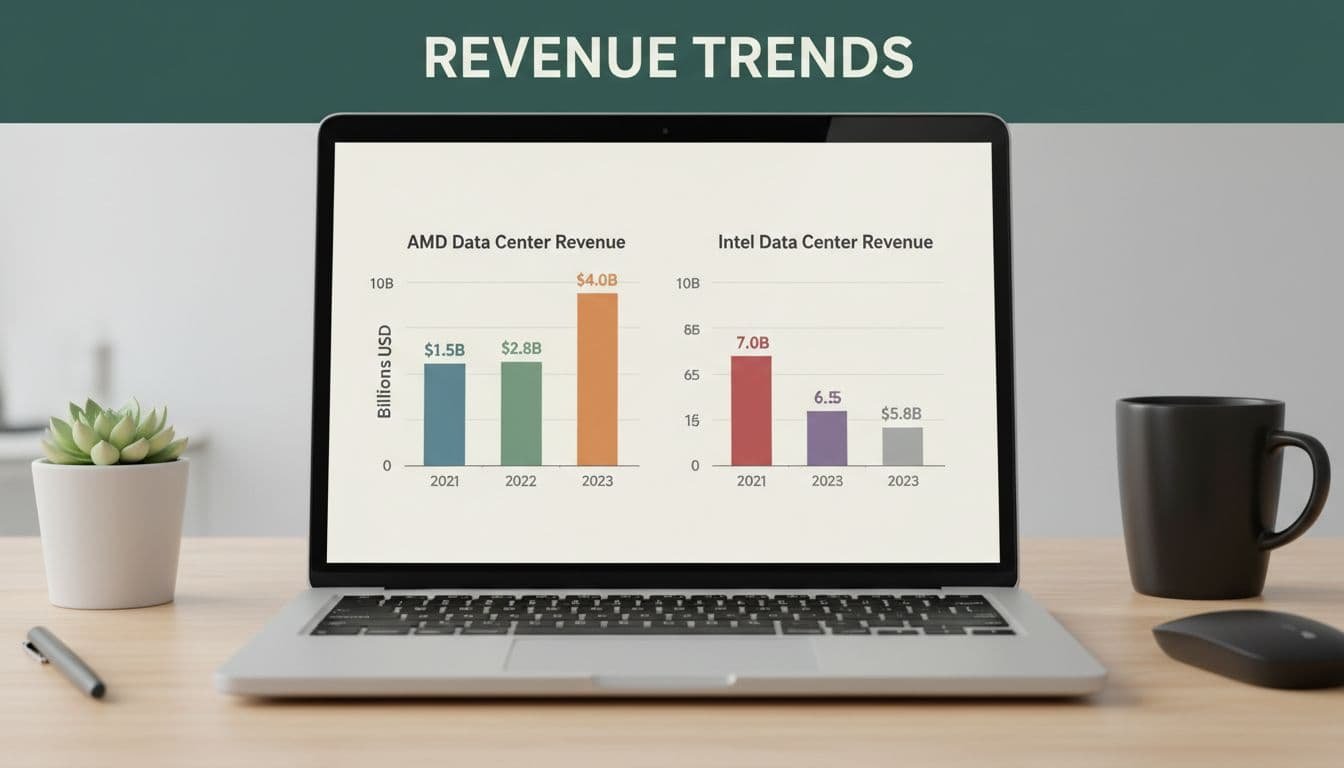
The latest reported quarter gives AMD the edge on momentum. AMD posted Q4 2025 revenue of $10.27 billion, up 34% from a year earlier. Non-GAAP EPS reached $1.53, data center revenue climbed to $5.38 billion, and gross margin hit 54%.
Intel was still larger in total sales, but the mix was weaker. Q4 2025 revenue was about $13.7 billion, down 4% year over year. Its Data Center and AI segment grew 9% to $4.74 billion, yet foundry losses stayed heavy at roughly $2.51 billion for the quarter.
Mix matters more than size. Data center and AI chips usually carry richer pricing than mainstream PC parts, so AMD can grow earnings faster even from a smaller base. Intel’s scale still helps, but it also makes the repair job heavier.
The near-term picture is straightforward. AMD is growing faster in the part of the market investors care about most. Intel still has reach, brand strength, and huge customer ties, but its numbers still read more like a turnaround than a smooth expansion.
AI and data center demand are the real swing factors
The core fight is no longer just PC CPUs. The real prize is AI infrastructure, where one cloud contract can move billions in revenue.
AMD has the stronger case here today. EPYC server CPUs keep taking share, and Instinct accelerators have made AMD a more serious AI supplier. Early 2026 market data still shows Intel holding the larger x86 CPU base, around 62%, while AMD sits near 35% to 38%. Still, data center share matters more than legacy PC share because those workloads bring better pricing and better margins.
There is also a software angle. AMD has improved its AI stack, but it still trails Nvidia’s ecosystem. Intel faces that same challenge, and it also has to prove that Gaudi and Xeon can win lasting budget share, not just pilot projects.
Intel is not out of the race. Its 2026 roadmap is more aggressive on the client side, and much of the bull case rests on Panther Lake, later launches, and better execution on 18A. But Intel’s story asks investors to believe in both product recovery and manufacturing recovery at the same time.
AMD’s roadmap is less dramatic, which can help. On consumer chips, 2026 looks more like a refresh year. In data centers, though, AMD mainly needs to keep executing on EPYC and Instinct demand. That is a simpler path. For more background on current accelerator competition, this AI chip comparison gives useful context.
Power limits in large data centers add another wrinkle. Buyers now care about performance per watt, cooling costs, and deployment speed. That helps vendors with reliable supply and efficient parts, which is why execution matters as much as raw chip speed.
Margins, foundry strategy, and valuation split the case
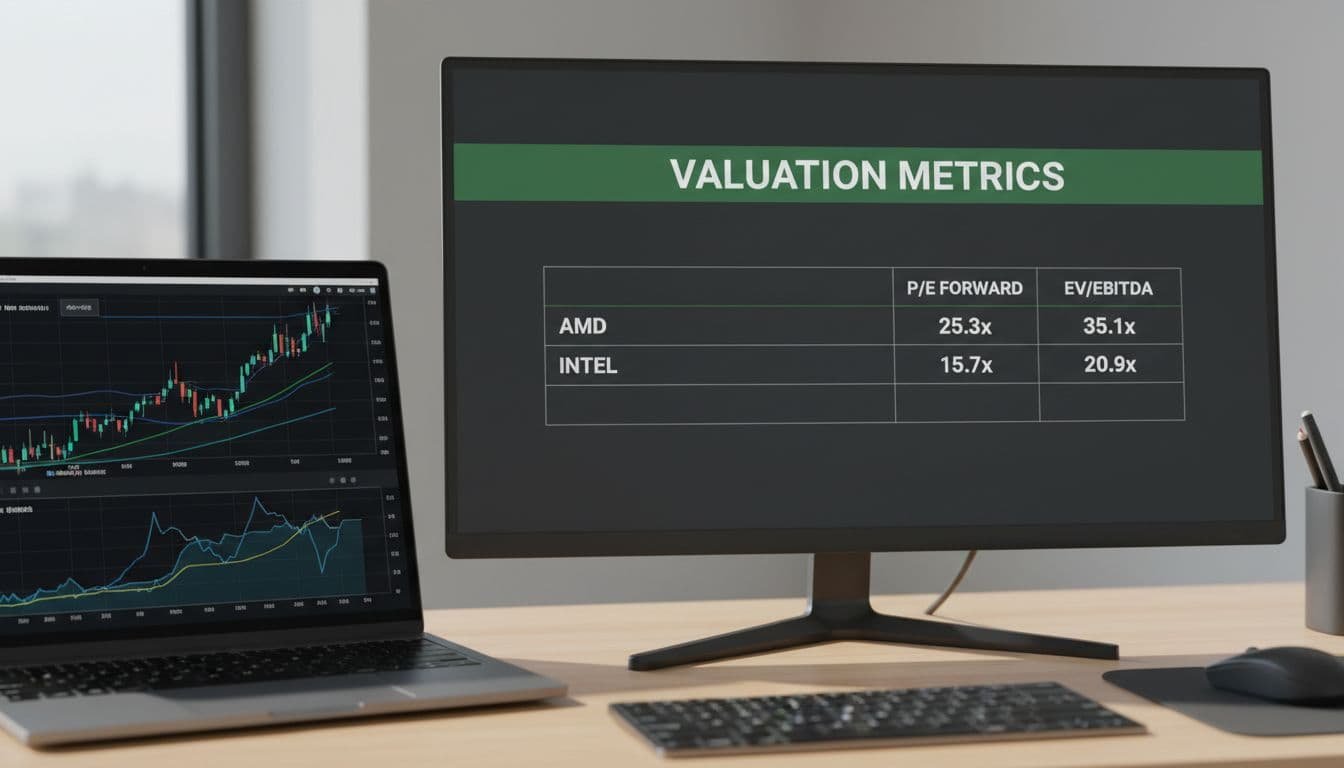
Growth investors usually pay up for cleaner numbers, and AMD fits that pattern. Several market data services put AMD at roughly 105 times trailing earnings in April 2026. That is expensive by normal chip-stock standards, so the market is already pricing in years of strong growth.
Intel looks cheaper, but the math is less tidy. Because profits have been weak, its P/E ratio is less useful right now. Some analysts focus instead on book value and turnaround potential, since Intel still owns major manufacturing assets and a large installed base.
This quick table keeps the case straight.
| Factor | AMD | Intel |
|---|---|---|
| Revenue trend | Q4 revenue up 34% | Q4 revenue down 4% |
| Data center momentum | Segment up about 39% | Segment up 9% |
| Margin profile | Around 50% to 54% gross margin | Pressured by foundry costs |
| Valuation style | Premium growth multiple | Cheaper turnaround setup |
| Main risk | High expectations | Execution risk, foundry losses |
AMD has the better current growth profile. Intel offers more upside only if the turnaround works.
There is also a sharp business-model split. AMD stays fabless and relies heavily on TSMC, which keeps capital needs lighter but creates supplier concentration risk. Intel builds and funds its own manufacturing base. If 18A works and foundry customers show up, Intel’s upside could be large. If that slips, margins may stay weak for longer. A recent March 2026 market comparison reflects that divide well.
Which stock looks better for growth, value, and risk
For pure growth, AMD still has the edge. Revenue is rising faster, margins are healthier, and AI exposure is more visible today. That does not make AMD low-risk. A stock with a rich valuation can drop fast if growth cools.
For value or turnaround investors, Intel is the more interesting name. The catch is simple: cheap and good value are not the same thing. Intel needs product wins, better factory economics, and steadier earnings before the market is likely to reward the story in a big way. That can suit patient investors, but it can frustrate anyone expecting a quick re-rating.
AMD vs Intel stock does not have one answer for every investor. As of April 2026, AMD looks better for people who want visible growth now, while Intel fits those willing to accept a longer and rougher recovery path. The better stock depends on which risk you dislike more, paying a premium for momentum or waiting for a turnaround that may take time.