High yield looks great until the cushion disappears. That is the real issue behind any AGNC dividend forecast in 2026.
AGNC still pays $0.12 a month, and that payout remains attractive for income investors. Still, the key question is not yield alone. It is whether earnings power, book value, and the rate backdrop can keep supporting that monthly check.
AGNC’s 2026 dividend looks covered, but only barely
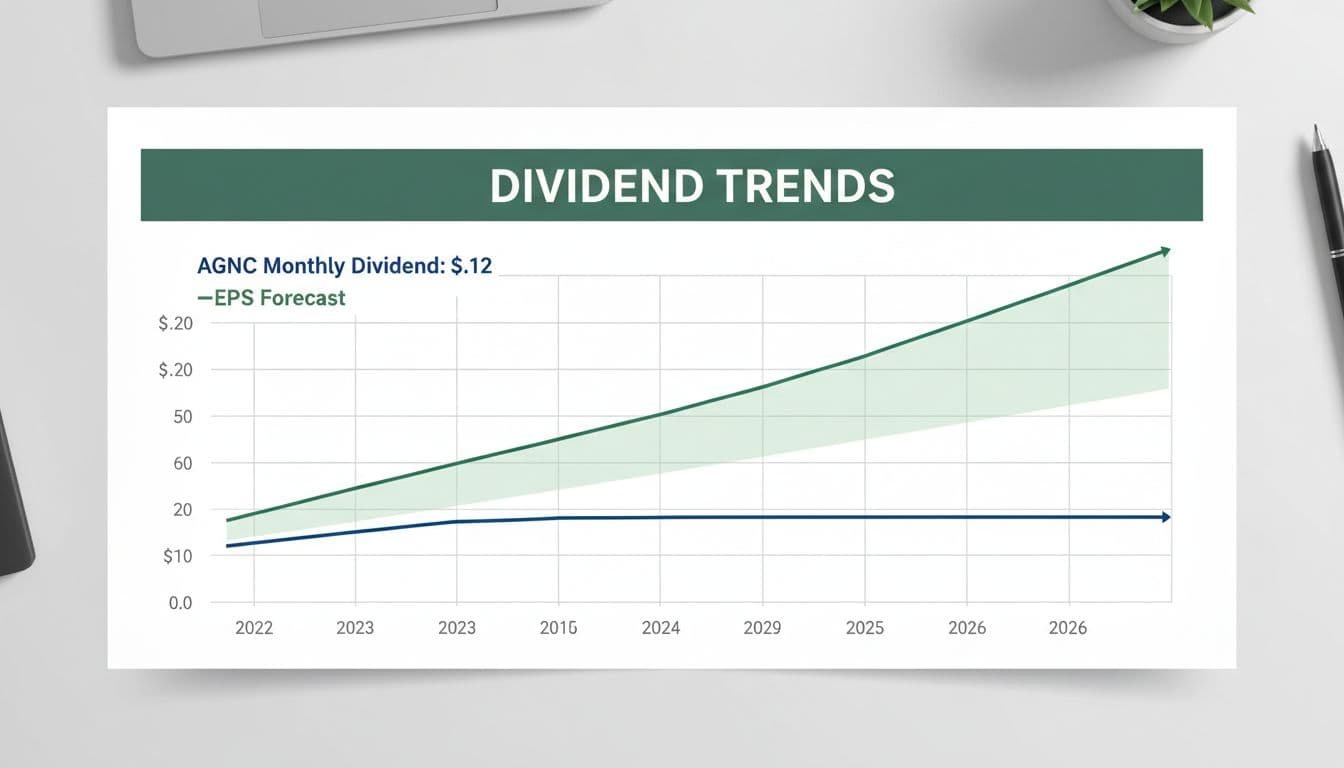
As of April 2026, AGNC’s monthly dividend remains $0.12 per share. You can confirm the recent pattern in AGNC’s official dividend history. Annualized, that is $1.44 a share, which keeps the stock’s yield in the low-to-mid teens at recent prices.
This quick snapshot sets the baseline:
| Item | April 2026 data | What it suggests |
|---|---|---|
| Monthly dividend | $0.12 | Annual payout is $1.44 |
| Payout ratio | About 1.0 | Coverage exists, but there is little slack |
| 2026 EPS forecast | $1.56 average, $1.38 to $1.87 range | Base case covers the dividend, low case does not |
The key point is simple. AGNC’s payout is not uncovered today, but it is not comfortably covered either. If the average 2026 EPS forecast holds, AGNC has a small margin above the dividend. If results slide toward the low end, that cushion fades.
AGNC is an agency mortgage REIT, so dividend coverage depends on more than one line item. Asset yields, funding costs, hedge performance, and prepayment speeds all affect earnings. That is why a payout ratio near 1.0 deserves respect. The company does not have a wide earnings buffer.
Base case for 2026: the dividend looks potentially stable, but the margin for error is thin.
That matters for income investors. A stable $0.12 monthly dividend can continue if spreads stay supportive and hedges do their job. Yet even a mild earnings miss could put pressure on management’s room to defend the payout.
Book value and valuation are just as important as the dividend
With AGNC, valuation is tied closely to book value. This is not a stock where a simple earnings multiple tells the whole story. Mortgage REITs live and die by portfolio marks, hedge results, and how the market values their capital base.
Available April 2026 data points to tangible book value around $8.28 per share. No confirmed Q1 2026 book value was available in current search results, so that figure is a recent reference point, not a fresh quarter-end number. With the stock trading around $10.5 in mid-April, AGNC changes hands at roughly 1.25 to 1.30 times that book value.
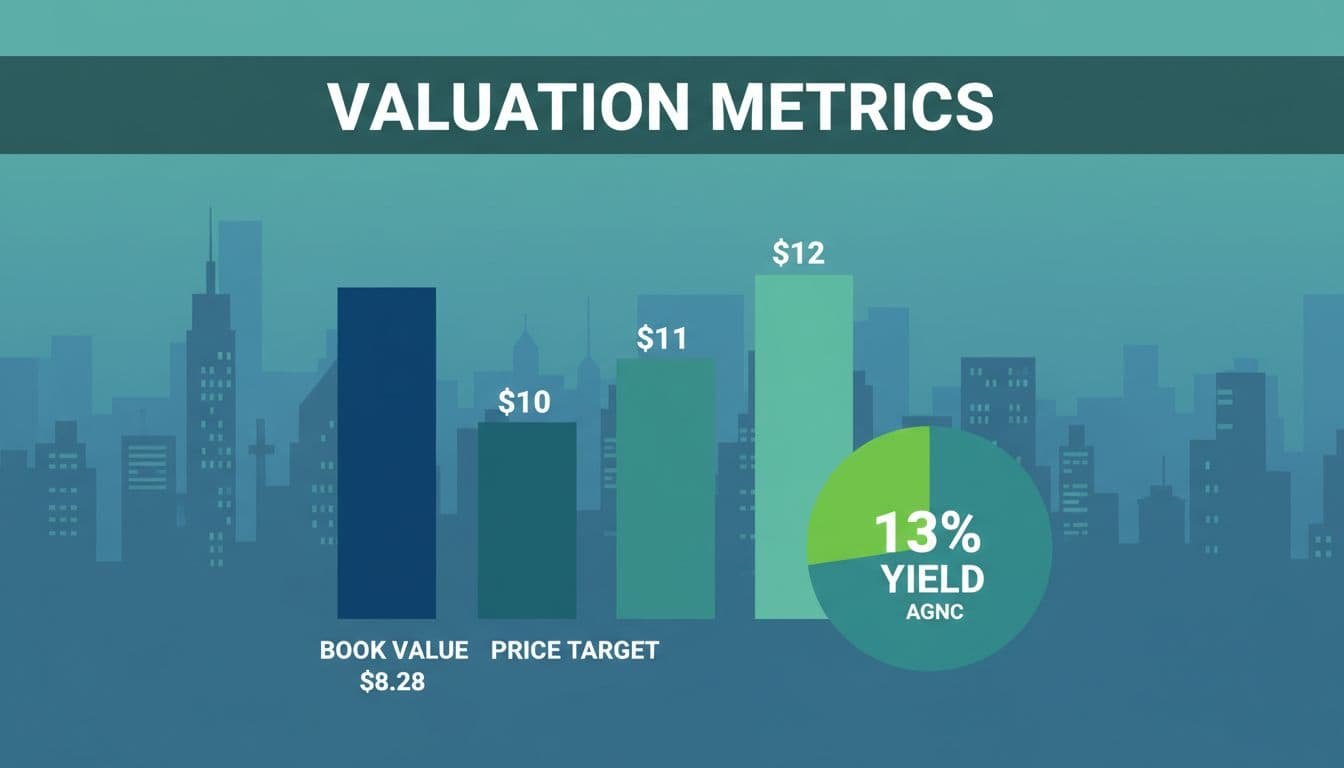
That premium is not extreme, but it is not cheap either. It tells you the market expects AGNC to keep earning enough to support the dividend and avoid a sharp book value hit. If book value rises, today’s price can still make sense. If book value slips, the stock can lose ground even if the dividend stays flat.
Recent previews show that tension clearly. A Yahoo Finance earnings preview pointed to weaker average asset yield and a lower net interest spread in late 2025, even as tangible book value improved. Meanwhile, the Q1 2026 earnings report page on MarketBeat showed consensus EPS around $0.37 for the quarter.
Valuation estimates also lean moderate, not aggressive. The Public analyst target page points to consensus value around the low-$11 area, while other published forecasts stretch a bit higher. That implies some upside from recent prices, but not a dramatic re-rating.
The bull case and bear case for AGNC in 2026
The bull case rests on a friendlier rate setup. If rate cuts continue or long-term yields settle down, agency mortgage-backed securities can gain value. That helps book value. At the same time, calmer funding costs and steady prepayments can support earnings, which matters more when the dividend is only narrowly covered.
There is also a spread argument. Tighter mortgage spreads can lift portfolio values, and stable MBS demand can support returns. For AGNC, that can mean better book value marks even if headline earnings do not surge.
The bear case is just as easy to see. A rate shock, wider mortgage spreads, or weaker core earnings would pressure both valuation and payout confidence. Since the payout ratio is already tight, AGNC does not have much room to absorb mistakes. That concern showed up in Kavout’s Q1 earnings note, which flagged the high payout ratio and long-term pressure on tangible book value.
For practical portfolio use, AGNC still looks more like a high-yield satellite holding than a core dividend stock. Income investors can own it, but they need to watch quarterly earnings, book value changes, and spread trends. This is a stock that can pay well while still carrying clear risk.
High yield still has its appeal, but the cushion matters more than the headline number. AGNC is paying $1.44 a year, and the average 2026 earnings forecast of $1.56 suggests that payout can hold.
That said, AGNC’s dividend does not have much spare coverage. If rates cooperate and book value stays firm, the dividend looks stable for 2026. If earnings soften or mortgage spreads widen, the risk of another reset returns quickly.